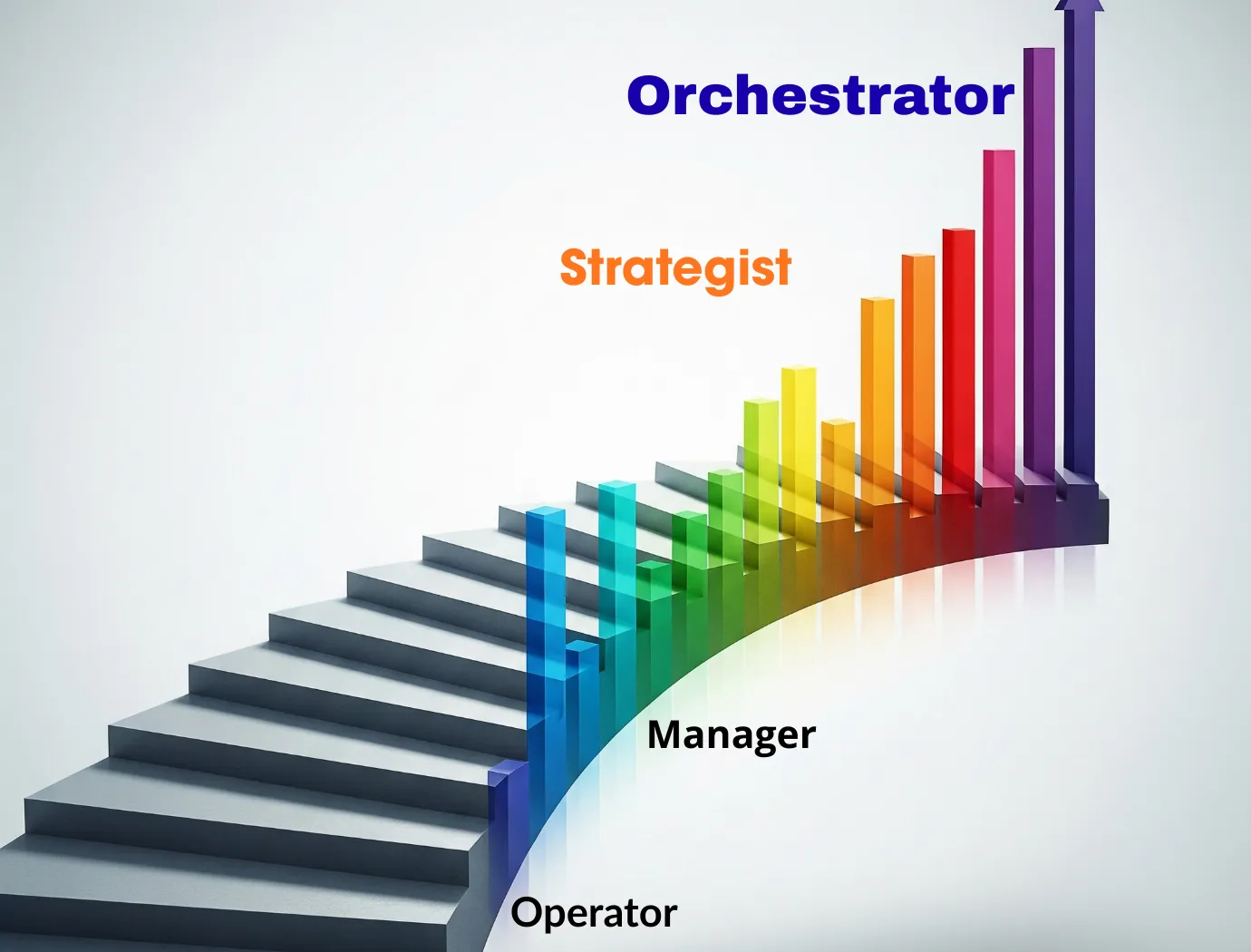
Unlock the next stage of your business by transforming how you think, decide, and lead. Move from Operator to Orchestrator—so your business grows, profits, and runs without burning you out.
Most business struggles aren’t just about strategy or effort. They’re shaped by how you think, what you believe, and the decisions you make as a founder.
Business Symptom
Growth is slow, even though you’re working harder than ever.
Hidden Pattern: Stuck in operator mode, struggling to step into strategic thinking.
Business Symptom
Customers keep negotiating your prices down.
Hidden Pattern: Scarcity mindset and low self-worth affecting pricing confidence.
Business Symptom
You feel lost or overwhelmed when launching new products.
Hidden Pattern: Self-doubt and fear of making the wrong move.
Business Symptom
Cash flow is always tight, no matter the revenue.
Hidden Pattern: Avoiding financial clarity due to discomfort with numbers or fear of facing reality.
Business Symptom
You’re unsure if your business is truly profitable.
Hidden Pattern: Lack of systems and reluctance to track key metrics.
Business Symptom
You’re the only one who knows how everything works.
Hidden Pattern: Fear of delegation and belief that no one else can do it right.
Business Symptom
You’re always busy but never feel caught up.
Hidden Pattern: Overworking identity and tying self-worth to being busy.
Business Symptom
You avoid tough conversations with your team or clients.
Hidden Pattern: Approval seeking and discomfort with conflict.
Business Symptom
You’re exhausted and wonder how long you can keep going.
Hidden Pattern: Burnout from carrying the entire business on your shoulders.
Business Symptom
You struggle to make decisions without second-guessing yourself.
Hidden Pattern: Self-doubt and fear of making mistakes.
How many of these patterns exist in your business today?
Clarity that unlocks business growth in 90 minutes
Ajna Insight is a rapid clarity program designed for founders who want to break through mental barriers, discover hidden patterns, and gain a clear map for business growth—without months of therapy or endless trial and error.
Operator
You do everything yourself. Overworked, reactive, and stuck in day-to-day firefighting.
Manager
You start delegating, build basic systems, but still micromanage and feel anxious letting go.
Strategist
You focus on growth levers, market validation, and profit clarity. The business works for you.
Orchestrator
You lead with vision, orchestrate teams, and the business thrives without your daily grind.
Real Results
What Founders Say After Ajna Insight
Vaishnavi B
Founder, Balav
"Ajna Insight changed how I think about my business. I stopped chasing everything & focused on attracting luxury clients. This doubled my leads in 3 months."
Mervyn V
Co Founder, Globexpats
"The clarity I got in one session was more than months of business books. I finally see where I was holding myself back."
Trupti S.
Yoga Coach
"I was stuck in operator mode for years. Now, my business runs without me firefighting every day. Highly recommend Ajna Insight!"
Next Step
Ajna Build
₹7,999
Business system-building program- Lifetime Validity
Deepest Transformation
Ajna Ascend
₹24,990
Cohort transformation program
For high-level strategic advisory,
contact us
about Ajna Authority.
Founder & Business Growth FAQ
40 Essential Questions for Founders: Business Growth, Mindset, and Transformation
Discover practical, insightful answers to the most pressing challenges faced by founders, solopreneurs, and small business owners. This comprehensive FAQ explores both surface-level business issues and the deeper mindset patterns that drive (or block) growth. Each answer is crafted for clarity, SEO, and AI search—helping you evolve from operator to orchestrator.
Ajna Insight focuses on the root cause—your thinking patterns—not just tactics. In just 90 minutes, you'll see exactly where you're stuck and how to unlock growth, without months of trial and error.
If you're a founder, solopreneur, or small business owner feeling stuck, Ajna Insight will help you gain clarity and break through—whether you're just starting or already established.
You'll receive an email with a short intake form and a link to book your 90-minute session. After the session, you'll get a personalized roadmap for your next steps.
Yes! If you attend the session and don't find value, email us within 48 hours for a full refund. No questions asked.
Businesses that grow faster usually have founders who focus on strategic thinking, build strong systems, and are willing to delegate. They invest in their own mindset, adapt quickly to market changes, and prioritize value over just working harder. Growth is not just about effort—it's about clarity, decision-making, and letting go of limiting beliefs. Founders who address their own mindset blocks and create scalable processes set the stage for sustainable, accelerated growth.
Growth often slows when founders hit the limits of their current mindset or systems. Early growth comes from hustle, but scaling requires new skills: delegation, strategic planning, and letting go of control. If the founder keeps doing everything themselves or avoids building systems, the business plateaus. Addressing mindset blocks and upgrading operations is key to breaking through growth ceilings.
Scaling is difficult when founders hold onto every task, fear delegation, or lack clear systems. Mindset issues like self-doubt, scarcity thinking, or fear of losing control can keep founders stuck in operator mode. To scale, founders must shift to strategic roles, trust others, and build repeatable processes. Addressing internal beliefs is as important as external strategies.
A founder’s mindset sets the tone for the entire business. Beliefs about money, value, and leadership shape decisions on pricing, hiring, and growth. Limiting beliefs—like scarcity, self-doubt, or fear of failure—can lead to playing small or avoiding risk. A growth-oriented mindset enables better strategies, resilience, and the ability to seize new opportunities.
Common mindset blocks include fear of delegation, perfectionism, low self-worth, and scarcity thinking. Many founders believe only they can do things right, leading to micromanagement and burnout. Others fear charging higher prices or making bold moves. Recognizing and shifting these patterns is essential for scaling and building a resilient business.
Customers negotiate when they don’t see enough value or when the business hasn’t positioned itself as an authority. If founders lack confidence in their pricing or communicate uncertainty, customers sense it. Clear value propositions, strong branding, and confident pricing reduce negotiations. Mindset plays a role—believe in your value, and others will too.
Positioning for higher value starts with understanding your unique strengths and solving real problems for your target audience. Communicate outcomes, not just features. Build trust through expertise, testimonials, and consistent branding. Internally, founders must believe in their worth and confidently set prices that reflect the value delivered.
Many businesses rely on the founder because systems and delegation are lacking. Founders often believe only they can do things right, or they fear letting go. This creates a bottleneck and limits growth. Building systems, training others, and trusting your team are essential steps to make the business independent of the founder.
Key systems include documented processes for sales, delivery, customer service, and finance. Automation tools, clear roles, and performance tracking help teams operate independently. Founders should focus on building repeatable systems that others can follow, freeing themselves to work on strategy and growth.
Cash flow issues arise when expenses outpace income, payments are delayed, or pricing is too low. Founders may focus on sales but neglect collections, cost control, or cash reserves. Mindset also matters—avoiding financial details or fearing tough conversations can worsen cash flow. Regular reviews and clear policies help maintain healthy finances.
Profitability improves when founders regularly review costs, set clear pricing, and focus on high-value offerings. Eliminating unprofitable products, negotiating better terms, and streamlining operations all help. A mindset shift from "more sales" to "better margins" is crucial. Profit is a result of intentional decisions, not just hard work.
Growth brings complexity. Founders who try to control everything or lack systems quickly become overwhelmed. The "overworking identity"—believing you must do it all—leads to stress and burnout. Delegation, prioritization, and mindset shifts are needed to handle growth without sacrificing well-being.
Reducing pressure starts with identifying what only you can do and delegating the rest. Build a capable team, document processes, and use technology to automate routine tasks. Let go of perfectionism and trust others. Regularly review your workload and focus on high-impact activities that drive growth.
Operator thinking is about doing tasks and solving immediate problems. Strategic thinking focuses on long-term goals, anticipating challenges, and designing systems for growth. Founders must shift from "doing" to "designing"—from working in the business to working on the business.
Transitioning requires letting go of daily tasks, delegating, and focusing on vision, planning, and growth. Founders must develop self-awareness, challenge limiting beliefs, and invest time in learning strategy. Regular reflection and mentorship can accelerate this shift from operator to strategist.
Scalable businesses are built on clear systems, strong teams, and a founder willing to let go of control. Focus on repeatable processes, automation, and training others to deliver consistent results. The founder’s role shifts from doing to designing and orchestrating growth.
An orchestrator designs the business to run smoothly without their constant involvement. They set vision, align teams, and ensure systems work together. Instead of doing every task, they empower others, monitor performance, and focus on strategic growth. This is the highest level of founder evolution.
A scarcity mindset leads to fear-based decisions—underpricing, overworking, or avoiding investment. Founders may hesitate to hire, market, or innovate, fearing loss. This limits growth and keeps the business small. Shifting to an abundance mindset opens up new opportunities and better choices.
Self-doubt is normal but can be managed by celebrating wins, seeking feedback, and focusing on progress over perfection. Mentorship, peer groups, and mindset coaching help founders build confidence. Regular reflection and reframing negative thoughts are powerful tools to overcome self-doubt.
Pricing struggles often stem from low self-worth, fear of rejection, or lack of clarity on value. Founders may compare themselves to competitors or worry about losing clients. Confidently pricing requires understanding your impact, communicating value, and believing in your worth.
Start by understanding your costs, market positioning, and the outcomes you deliver. Benchmark against competitors, but focus on your unique value. Test higher prices and observe client responses. Mindset work—believing you deserve to charge more—is often the key to successful pricing.
Self-worth influences every decision—from pricing to hiring to negotiating. Founders with high self-worth set healthy boundaries, charge appropriately, and attract better clients. Those with low self-worth may undercharge, overwork, or tolerate poor relationships. Building self-worth is foundational for sustainable business success.
Breaking the overworking cycle starts with recognizing that rest and delegation are essential for growth. Set clear boundaries, prioritize tasks, and delegate lower-value work. Challenge beliefs that equate busyness with success. Regularly schedule downtime and review your workload to prevent burnout.
Delegation is avoided due to fear of losing control, lack of trust, or perfectionism. Founders may believe only they can do things right or worry about mistakes. Building trust, training your team, and accepting that "done" is better than "perfect" are key to effective delegation.
Start by identifying tasks that others can handle. Provide clear instructions, set expectations, and allow room for learning. Trust your team and give constructive feedback. Let go of perfection and focus on outcomes. Delegation is a skill that improves with practice and reflection.
Approval seeking leads founders to make decisions based on others’ opinions rather than business needs. This can result in underpricing, over-delivering, or avoiding tough conversations. Growth requires clarity, confidence, and the willingness to make unpopular but necessary choices.
Strategic thinking develops through regular reflection, learning from mentors, and studying successful businesses. Set aside time for planning, analyze trends, and anticipate challenges. Ask bigger questions about the future and design systems that support your vision. Practice makes strategy a habit.
Market clarity ensures you solve real problems for the right audience. Without it, products may miss the mark, leading to poor sales and wasted effort. Research your market, validate ideas, and listen to feedback before launching. Clarity reduces risk and increases the chances of success.
Talk to potential customers, study competitors, and test ideas with small experiments. Use surveys, interviews, and data to understand needs and preferences. Stay open to feedback and be willing to pivot. Market clarity comes from listening and learning, not guessing.
Mindset shapes hiring—scarcity thinking leads to hiring cheap, not best-fit talent. Fear of delegation causes founders to delay hiring or micromanage. Growth-oriented founders seek people who complement their strengths and invest in building a strong team. Awareness of your patterns leads to better hiring choices.
Set clear expectations, provide regular feedback, and recognize achievements. Model accountability yourself—follow through on commitments and admit mistakes. Use systems to track progress and address issues promptly. A culture of accountability starts with leadership and consistent communication.
Cash flow stress can result from poor payment terms, high expenses, or lack of financial planning. Founders may focus on revenue but ignore collections or overspend on growth. Regular cash flow reviews, clear invoicing, and disciplined spending are essential for financial stability.
Resilience comes from a strong support network, regular self-care, and a growth mindset. Learn from setbacks, adapt quickly, and focus on solutions. Celebrate small wins and maintain perspective. Resilient founders see challenges as opportunities to grow and innovate.
Pivoting is needed when the market shifts, growth stalls, or your offer no longer resonates. Listen to feedback, track key metrics, and stay open to change. A willingness to adapt, rather than stubbornly sticking to old ways, is a hallmark of successful founders.
The first step is self-awareness—recognize that feeling stuck is a signal, not a failure. Reflect on your mindset, seek outside perspective, and identify patterns holding you back. Taking action, even a small step, breaks inertia. Support from mentors or coaches can accelerate your progress.
Ready for Your Breakthrough?
Take the First Step with Ajna Insight
Stop letting hidden patterns hold your business back. Just one session can change how you think, decide, and grow—forever.